Part 2 : Tests your general knowledge with
multiple choice questions
1 Broken white lines mean
a. passing is permitted in either direction.
b. separate lanes of traffic going in the same direction.
c. passing is not permitted in either direction.
d. railroad crossing ahead.
2 The speed limit in business zones is
a. 15 mph.
b. 25 mph.
c. 30 mph.
d. 35 mph
3 When a school bus stops to load or unload children, vehicles traveling
in the same direction as the bus must:
a. Slow down and proceed with caution.
b. Maintain speed.
c. Stop until all persons are clear and the bus moves again.
d. Stop, then proceed with caution.
4 Before changing lanes
a. use your turn signal
b. check for other drivers who also may be moving into the same lane
c. check your side and rearview mirrors
d. all of these
5 When passing another vehicle:
a. Do not accelerate to pass
b. honking and flashing their lights.
c. you can see the front of the passed vehicle in your rearview mirror
d. all of the above
6 If driving during heavy rain , a driver should
a. Use high-beam.
b. Use low-beam.
c. Do not turn on headlights.
d. check your side and rear view mirrors.
7 When should you turn on your headlights
a. At sunset
b. when heavy rain
c. At day time
d. you must use your headlights at night and at other times when it's hard to see.
8 Every time you get behind the wheel, you
a. accept responsibility for your actions
b. must obey Virginia's traffic laws
c. must ensure you are a safe driver
d. all of these
9 Always wear your shoulder strap seat belt
a. behind your back
b. under your arm
c. loosely
d. snug without any slack
10 The safest place to install a child safety seat is in
a. the front passenger seat.
b. the driver's side back seat.
c. the center back seat.
d. any passenger seat - they are equally safe
11 You must yield for
a. pedestrians who are crossing a street
b. funeral processions
c. all military convoys
d. All of these
12 When driving on a slippery surface such as snow or ice, you should
a. Allow extra space between your car and the car ahead.
b. Shift to a low gear before going down steep hills
c. Reduce your speed
d. All of the above
13 You have stopped at a red light at an intersection. An emergency vehicle with
flashing lights is approaching from behind. What should you do?
a. Immediately drive through the intersection and stop.
b. Drive forward, even if it means blocking the intersection, and move to the right
c. Turn to the left in the intersection and stop at the right side of the road.
d. Obey any instructions from firefighters or police officers.
14 Zero tolerance is
a. a law that makes it illegal for youth under 21 to drive with a blood alcohol content of .02 or higher.
b. getting good grades.
c. a smart teenager.
d. none of the above
15 You may not park
a. within 15 feet of a fire hydrant.
b. within 50 feet of a railroad crossing.
c. within 20 feet of an intersection.
d. all of the above.
16 If you are involved in a crash, you must:
a. Take the person to the nearest hospital.
b. Continue home and file a crash report.
c. Stop, help any injured, report the crash to the police, exchange information and notify
your insurance company.
d. Check your car for damages.
17 The correct hand signal for left turn is:
a. Right hand and arm pointing downward.
b. Left hand and arm pointing straight out.
c. Left hand and arm pointing downward.
d. Left hand and arm pointing upward.
18 If you drive after drinking, be aware that alcohol
affects:
a. Your coordination.
b. Your vision.
c. Your judgment.
d. All of these.
19 Twelve ounce of beer is the same as
a. a shot of liquor
b. two-ounce glass of wine
c. two ounce of beer
d. All of these.
20 Passing is unlawful and unsafe
a. on hill, curve, at intersection or railroad crossings
b. off the pavement or shoulder of the road
c. when school bus is stopped to load or unload passengers
d. All of these.
21 The only way to avoid the riks of drinking and driving is
a. decide before you start drinking that you are not going to drive
b. take a cold shower before driving
c. eat a lot of food before drinking
d. drink coffee before driving
22 The small size of a motorcycle can cause you to misjude the motorcycle's speed and distance. You should
a. no need to check for motorcycles
b. check twice for motorcycles and use extra caution
c. honk and flash for motorcycles
d. exceed the speed limits to pass
23 Who is responsible for making sure that children are properly secured.
a. Driver.
b. Passenger.
c. Children.
d. None of above.
24 An unattended vehicle or other property demage in a crash if you
cannot locate anyone you should
a. continue home
b. leave a note that can be found easily at the scene of the crash
c. cheack your car demages
d. report the crash to insurance company
25 If you move you are required to notify DMV within
a. 15 days
b. 30 days
c. 45 days
d. 60 days.
Answer
1) b: separate lanes of traffic going in the same direction.
2) b: 25 mph
3) c: Stop until all persons are clear and the bus moves again.
4) d: all of these
5) c: you can see the front of the passed vehicle in your rearview mirror
6) b: Use low-beam
7) d: you must use your headlights at night and at other times when it's hard to see.
8) d: all of these
9) d: snug without any slack
10) c: the center back seat
11) d. All of these
12) d: all of the above
13) d: Obey any instructions from firefighters or police officers.
14) a: a law that makes it illegal for youth under 21 to drive with a blood alcohol
content of .02 or higher.
15) d: all of the above
16) c: Stop, help any injured, report the crash to the police, exchange information
and notify your insurance company.
17) b: Left hand and arm pointing straight out.
18) d: All of these
19) a: a shot of liquor
20) d: All of these.
21) a: decide before you start drinking that you are not going to drive
22) b: check twice for motorcycles and use extra caution
23) a: Driver.
24) b: leave a note that can be found easily at the scene of the crash
25) b: 30 days.
8/11/2012

Part 2: general knowledge questions 3
Part 2 : Tests your general knowledge with
multiple choice questions
1 Broken yellow line alongside a solid yellow line mean
a. passing is permitted in either direction.
b. passing is not permitted in either direction
c. passing is allowed from the side of the brokenline, but not from the side of the solid line
d. pedestrian crossing ahead.
2 You have stopped at a red light at an intersection. An emergency vehicle with flashing lights is approaching from behind. What should you do?
a. Immediately drive through the intersection and stop.
b. Turn to the left in the intersection and stop at the right side of the road.
c. Obey any instructions from firefighters or police officers.
d. Drive forward, even if it means blocking the intersection, and move to the right
3 When two vehicles from different directions arrive at the same time at an intersection with no signs or signals,
a. accept responsibility for your actions
b. the driver on the right must allow the driver on the left to go first
c. the driver on the left must allow the driver on the right to go first
d. none all of these
4 You must yield to funeral processions.
a. Do not cut through
b. Do not join or interfere with a funeral procession.
c. You must obey all traffic signs and signals.
d. All of these
5 The correct hand signal for stopping is:
a. Right hand and arm pointing downward.
b. Left hand and arm pointing .downward
c. Left hand and arm pointing straight out.
d. Left hand and arm pointing upward.
6 When a school bus stops to load or unload children, you are traveling in the opposite direction on a roadway with a median or barrier dividing the road, you may
a. Slow down and proceed with caution.
b. You do not have to stop
c. Stop, then proceed with caution.
d. Stop until all persons are clear and the bus moves again
7 If your vehicle is equipped with airbags, you should
a. tilt your steering wheel downward if possible, so the airbag points toward your chest instead of your head of neck.
b. buckle up.
c. move your seat back so that you are at least 10 inches from the steering wheel.
d. all of the above.
8 The penalty for conviction of driving under the influence (DUI) is
a. fines.
b. loss of driver's license.
c. jail time.
d. all of the above.
9 Never follow any emergency vehicle closer than
a. 800 feet.
b. 250 feet.
c. 100 feet.
d. 500 feet.
10 The best way to see a car in your blind spot is
a. quickly turning your head and glancing over your shoulder
b. Pay attention to changing traffic patterns and always follow the roadway
c. look behide
d. slow down
11 Use Low-beams whenever you are within
a. 100 feet of the vehicle ahead.
b. 200 feet of the vehicle ahead.
c. 300 feet of the vehicle ahead.
d. 500 feet of the vehicle ahead.
12 When changing lanes you should
a. check your side and rear view mirrors.
b. use your turn signal to let other drivers know you plan to change lanes.
c. quickly glance over your shoulder and check for any vehicles that may be in your blind spot
d. all of the above
13 You may pass on the right if
a. the vehicle you are passing has not accelerated to pass
b. the vehicle you are passing has honked and flashed
c. you can see the front of the passed vehicle in your rearview mirror
d. the vehicle you are passing has signaled and is making a left turn
14 A speed limit is
a. the suggested speed to travel on a road under ideal conditions.
b. the minimum legal speed you can travel on a road under ideal conditions.
c. the maximum legal speed you can travel on a road under ideal conditions.
d. none of the above
15 Trucks, tractor-trailers and recreational vehicles are
a. prone to accelerate slowly and require greater stopping distances.
b. longer, higher, and wider than other vehicles.
c. different from smaller vehicles because their size and
configuration creates blind spots where crashes are more likely to occur.
d. distinguished by all of the above characteristics
16 To make a left turn
a. you should be in the lane closest to curb
b. you should be in the furtest left lane possible.
c. you should turn on your right-turn signal
d. all of above
17 Driver age 21 or older are considered to be DUI if blood alcohol
content
a. 0.02 or higher
b. 0.06 or higher
c. 0.08 or higher
d. 0.09 or higher
18 Approximately half of all fatal motorcycle crashes involve
automobiles cuased by
a. motorist's failure to see a motorcycle in traffic
b. size of motorcycle
c. speed of motorcycle
d. None of above
19 Bicycle
a. Do not have any rules
b. Obay the same traffice rules
c. Do Not Obay the same traffice rules
d. None of above
20 You may not park
a. within 15 feet of a fire hydrant.
b. within 50 feet of a railroad crossing.
c. within 20 feet of an intersection.
d. all of the above.
21 When should you turn on your headlights
a. At sunset
b. when heavy rain
c. At day time
d. you must use your headlights at night and at other times when it's hard to see.
22 How should you remove snow and ice from your car
a. remove snow from hood
b. remove snow from windows only
c. remove snow from entire car, including the roof,hood and rear of the vehicle
d. no need to remove snow from the car
23 Combining alcohol with other drugs usually
a. Decrease the effects
b. multiplies the effects
c. Not effects
d. same effects
24 An unattended vehicle or other property demage in a crash if you cannot locate anyone you should
a. continue home
b. leave a note that can be found easily at the scene of the crash
c. cheack your car demages
d. report the crash to insurance company
25 To obtain license plates , you must have
a. health insurance
b. home insurance
c. liability insurance
d. all of above
Answer
1) c: passing is allowed from the side of the brokenline, but not from the side of the solid line
2) c: Obey any instructions from firefighters or police officers
3) c: the driver on the left must allow the driver on the right to go first
4) d : All of these, Do not cut through, join or interfere with a funeral procession.
5) b: Left hand and arm pointing downward
6) b: You do not have to stop
7) d: all of the above.
8) d: all of the above
9) d: 500 feet.
10) a: quickly turning your head and glancing over your shoulder
11) b: 200 feet of the vehicle ahead.
12) d: all of the above
13) d: the vehicle you are passing has signaled and is making a left turn
14) c: the maximum legal speed you can travel on a road under ideal conditions.
15) d: distinguished by all of the above characteristics
16) b: you should be in the furtest left lane possible.
17) c: 0.08 or higher
18) a: motorist's failure to see a motorcycle in traffic
19) b: Obay the same traffice rules
20) d: all of the above.
21) d: you must use your headlights at night and at other times when it's hard to see.
22) c. remove snow from entire car, including the roof,hood and rear of the vehicle
23) b. multiplies the effects
24) b: leave a note that can be found easily at the scene of the crash
25) c: liability insurance
multiple choice questions
1 Broken yellow line alongside a solid yellow line mean
a. passing is permitted in either direction.
b. passing is not permitted in either direction
c. passing is allowed from the side of the brokenline, but not from the side of the solid line
d. pedestrian crossing ahead.
2 You have stopped at a red light at an intersection. An emergency vehicle with flashing lights is approaching from behind. What should you do?
a. Immediately drive through the intersection and stop.
b. Turn to the left in the intersection and stop at the right side of the road.
c. Obey any instructions from firefighters or police officers.
d. Drive forward, even if it means blocking the intersection, and move to the right
3 When two vehicles from different directions arrive at the same time at an intersection with no signs or signals,
a. accept responsibility for your actions
b. the driver on the right must allow the driver on the left to go first
c. the driver on the left must allow the driver on the right to go first
d. none all of these
4 You must yield to funeral processions.
a. Do not cut through
b. Do not join or interfere with a funeral procession.
c. You must obey all traffic signs and signals.
d. All of these
5 The correct hand signal for stopping is:
a. Right hand and arm pointing downward.
b. Left hand and arm pointing .downward
c. Left hand and arm pointing straight out.
d. Left hand and arm pointing upward.
6 When a school bus stops to load or unload children, you are traveling in the opposite direction on a roadway with a median or barrier dividing the road, you may
a. Slow down and proceed with caution.
b. You do not have to stop
c. Stop, then proceed with caution.
d. Stop until all persons are clear and the bus moves again
7 If your vehicle is equipped with airbags, you should
a. tilt your steering wheel downward if possible, so the airbag points toward your chest instead of your head of neck.
b. buckle up.
c. move your seat back so that you are at least 10 inches from the steering wheel.
d. all of the above.
8 The penalty for conviction of driving under the influence (DUI) is
a. fines.
b. loss of driver's license.
c. jail time.
d. all of the above.
9 Never follow any emergency vehicle closer than
a. 800 feet.
b. 250 feet.
c. 100 feet.
d. 500 feet.
10 The best way to see a car in your blind spot is
a. quickly turning your head and glancing over your shoulder
b. Pay attention to changing traffic patterns and always follow the roadway
c. look behide
d. slow down
11 Use Low-beams whenever you are within
a. 100 feet of the vehicle ahead.
b. 200 feet of the vehicle ahead.
c. 300 feet of the vehicle ahead.
d. 500 feet of the vehicle ahead.
12 When changing lanes you should
a. check your side and rear view mirrors.
b. use your turn signal to let other drivers know you plan to change lanes.
c. quickly glance over your shoulder and check for any vehicles that may be in your blind spot
d. all of the above
13 You may pass on the right if
a. the vehicle you are passing has not accelerated to pass
b. the vehicle you are passing has honked and flashed
c. you can see the front of the passed vehicle in your rearview mirror
d. the vehicle you are passing has signaled and is making a left turn
14 A speed limit is
a. the suggested speed to travel on a road under ideal conditions.
b. the minimum legal speed you can travel on a road under ideal conditions.
c. the maximum legal speed you can travel on a road under ideal conditions.
d. none of the above
15 Trucks, tractor-trailers and recreational vehicles are
a. prone to accelerate slowly and require greater stopping distances.
b. longer, higher, and wider than other vehicles.
c. different from smaller vehicles because their size and
configuration creates blind spots where crashes are more likely to occur.
d. distinguished by all of the above characteristics
16 To make a left turn
a. you should be in the lane closest to curb
b. you should be in the furtest left lane possible.
c. you should turn on your right-turn signal
d. all of above
17 Driver age 21 or older are considered to be DUI if blood alcohol
content
a. 0.02 or higher
b. 0.06 or higher
c. 0.08 or higher
d. 0.09 or higher
18 Approximately half of all fatal motorcycle crashes involve
automobiles cuased by
a. motorist's failure to see a motorcycle in traffic
b. size of motorcycle
c. speed of motorcycle
d. None of above
19 Bicycle
a. Do not have any rules
b. Obay the same traffice rules
c. Do Not Obay the same traffice rules
d. None of above
20 You may not park
a. within 15 feet of a fire hydrant.
b. within 50 feet of a railroad crossing.
c. within 20 feet of an intersection.
d. all of the above.
21 When should you turn on your headlights
a. At sunset
b. when heavy rain
c. At day time
d. you must use your headlights at night and at other times when it's hard to see.
22 How should you remove snow and ice from your car
a. remove snow from hood
b. remove snow from windows only
c. remove snow from entire car, including the roof,hood and rear of the vehicle
d. no need to remove snow from the car
23 Combining alcohol with other drugs usually
a. Decrease the effects
b. multiplies the effects
c. Not effects
d. same effects
24 An unattended vehicle or other property demage in a crash if you cannot locate anyone you should
a. continue home
b. leave a note that can be found easily at the scene of the crash
c. cheack your car demages
d. report the crash to insurance company
25 To obtain license plates , you must have
a. health insurance
b. home insurance
c. liability insurance
d. all of above
Answer
1) c: passing is allowed from the side of the brokenline, but not from the side of the solid line
2) c: Obey any instructions from firefighters or police officers
3) c: the driver on the left must allow the driver on the right to go first
4) d : All of these, Do not cut through, join or interfere with a funeral procession.
5) b: Left hand and arm pointing downward
6) b: You do not have to stop
7) d: all of the above.
8) d: all of the above
9) d: 500 feet.
10) a: quickly turning your head and glancing over your shoulder
11) b: 200 feet of the vehicle ahead.
12) d: all of the above
13) d: the vehicle you are passing has signaled and is making a left turn
14) c: the maximum legal speed you can travel on a road under ideal conditions.
15) d: distinguished by all of the above characteristics
16) b: you should be in the furtest left lane possible.
17) c: 0.08 or higher
18) a: motorist's failure to see a motorcycle in traffic
19) b: Obay the same traffice rules
20) d: all of the above.
21) d: you must use your headlights at night and at other times when it's hard to see.
22) c. remove snow from entire car, including the roof,hood and rear of the vehicle
23) b. multiplies the effects
24) b: leave a note that can be found easily at the scene of the crash
25) c: liability insurance
Part 2: general knowledge questions 2
Part 2 : Tests your general knowledge with multiple choice questions
1 Double solid yellow linespainted down the middle of the road mean
a. passing is permitted in either direction.
b. railroad crossing ahead.
c. passing is not permitted in either direction.
d. pedestrian crossing ahead.
2 Broken white lines mean
a. passing is permitted in either direction.
b. railroad crossing ahead.
c. passing is not permitted in either direction.
d. separate lanes of traffic going in the same direction.
3 Many two-lane roads in Virginia do not have lane markings to separate the lanes. On an unmarked two-lane road, youmay
a. passing is permitted in either direction.
b. passing is not permitted in either direction.
c. pass a slow moving vehicle on the left side if there are no signs prohibiting passing.
d. pass a slow moving vehicle on the right side if there are no signs prohibiting passing.
4 The speed limit in business zones is
a. 15 mph.
b. 25 mph.
c. 30 mph.
d. 35 mph.
5 High Occupancy Vehicles (HOV) lanes are
a. drivers in both lanes are responsible for merging smoothly.
b. lanes are reserved for vehicles with specific number of occupants in vehicle.
c. specific turning movements are allowed from specific lanes.
d. do not enter
6 If your steering wheel were a clock, your hands should be at
a. 10 o’clock and 2 o’clock positions.
b. 9 o’clock and 3 o’clock positions
c. 8 o’clock and 4 o’clock positions.
d. All of these
7 If you drive after drinking, be aware that alcohol affects:
a. Your coordination.
b. Your vision.
c. Your judgment.
d. All of these.
8 When a school bus stops to load or unload children, vehicles traveling in the same direction as the bus must:
a. Slow down and proceed with caution.
b. Maintain speed.
c. Stop, then proceed with caution.
d. Stop until all persons are clear and the bus moves again.
9 You may not park within_________ feet of where
fire trucks or equipment are stopped answering an alarm.
a. 200 feet.
b. 250 feet.
c. 300 feet.
d. 500 feet.
10 If you are involved in a crash, you must:
a. Take the person to the nearest hospital.
b. Continue home and file a crash report.
c. Stop, help any injured, report the crash to the police, exchange information and notify
your insurance company.
d. Check your car for damages.
11 Children under age ___ must be secured in an approved child safety seat.
a. eight
b. seven
c. five
d. six
12 It's your responsibility to ensure that the vehicle you are driving is
a. properly registered.
b. in good working order.
c. insured.
d. all of the above
13 Use high-beam headlights on highways, unless another vehicle is within
a. 100 feet.
b. 250 feet.
c. 300 feet.
d. 500 feet.
14 The best way to see a car in your blind spot is
a. slow down
b. Pay attention to changing traffic patterns and always follow the roadway
c. look behide
d. quickly turning your head and glancing over your shoulder
15 When passing another vehicle:
a. Do not accelerate to pass
b. honking and flashing their lights.
c. you can see the front of the passed vehicle in your rearview mirror
d. all of the above
16 The correct hand signal for left turn is:
a. Right hand and arm pointing downward.
b. Left hand and arm pointing straight out.
c. Left hand and arm pointing downward.
d. Left hand and arm pointing upward.
17 Driver age 21 or older are considered to be DUI if blood alcohol content
a. 0.02 or higher
b. 0.06 or higher
c. 0.08 or higher
d. 0.09 or higher
18 When approaching a roundabout,
a. slow down
B. Use your turn signals to indicate where you want to go
c. Entering traffic must yield the right-of-way to traffic already in the circle
d. All of these
19 Before driving a vehicle with a light to meduim trailer attached before each trip ensure
a. the pin securing the ball mount to the receiver is intact
b. the hitch coupler is secured
c. safty chain and the electrical plug are properly attached
d. All of these
20 Approximately half of all fatal motorcycle crashes involve automobiles cuased by
a. motorist's failure to see a motorcycle in traffic
b. size of motorcycle
c. speed of motorcycle
d. None of above
21 Bicycle
a. Do not have any rules
b. Obay the same traffice rules
c. Do Not Obay the same traffice rules
d. None of above
22 What can decrease intoxication
a. coffee
b. cold shower
c. exercise
d. only time will decrease
23 The only way to avoid the riks of drinking and driving is
a. decide before you start drinking that you are not going to drive
b. take a cold shower before driving
c. eat a lot of food before drinking
d. drink coffee before driving
24 To obtain license plates , you must have
a. liability insurance
b. home insurance
c. health insurance
d. all of above
25 If you move you are required to notify DMV within
a. 15 days
b. 25 days
c. 30 days
d. 60 days.
Answer
1) c: passing is not permitted in either direction
2) d: separate lanes of traffic going in the same direction.
3) c: Pass a slow moving vehicle on the left side if there are no signs prohibiting passing.
4) b: 25 mph
5) b: lanes are reserved for vehicles with specific number of occupants in vehicle
6) c: 8 o’clock and 4 o’clock positions
7) d: All of these
8) d: Stop until all persons are clear and the bus moves again.
9) d: 500 feet.
10) c. Stop, help any injured, report the crash to the police, exchange information
and notify your insurance company.
11) a: eight
12) d: all of the above
13) d: 500 feet.
14) d: quickly turning your head and glancing over your shoulder
15) c: you can see the front of the passed vehicle in your rearview mirror
16) b. Left hand and arm pointing straight out.
17) c. 0.08 or higher
18) d: All of these
19) d: all of the above.
20) a. motorist's failure to see a motorcycle in traffic
21) b. Obay the same traffice rules
22) d. only time will decrease
23) a. decide before you start drinking that you are not going to drive
24) a: liability insurance
25) c: 30 days.
1 Double solid yellow linespainted down the middle of the road mean
a. passing is permitted in either direction.
b. railroad crossing ahead.
c. passing is not permitted in either direction.
d. pedestrian crossing ahead.
2 Broken white lines mean
a. passing is permitted in either direction.
b. railroad crossing ahead.
c. passing is not permitted in either direction.
d. separate lanes of traffic going in the same direction.
3 Many two-lane roads in Virginia do not have lane markings to separate the lanes. On an unmarked two-lane road, youmay
a. passing is permitted in either direction.
b. passing is not permitted in either direction.
c. pass a slow moving vehicle on the left side if there are no signs prohibiting passing.
d. pass a slow moving vehicle on the right side if there are no signs prohibiting passing.
4 The speed limit in business zones is
a. 15 mph.
b. 25 mph.
c. 30 mph.
d. 35 mph.
5 High Occupancy Vehicles (HOV) lanes are
a. drivers in both lanes are responsible for merging smoothly.
b. lanes are reserved for vehicles with specific number of occupants in vehicle.
c. specific turning movements are allowed from specific lanes.
d. do not enter
6 If your steering wheel were a clock, your hands should be at
a. 10 o’clock and 2 o’clock positions.
b. 9 o’clock and 3 o’clock positions
c. 8 o’clock and 4 o’clock positions.
d. All of these
7 If you drive after drinking, be aware that alcohol affects:
a. Your coordination.
b. Your vision.
c. Your judgment.
d. All of these.
8 When a school bus stops to load or unload children, vehicles traveling in the same direction as the bus must:
a. Slow down and proceed with caution.
b. Maintain speed.
c. Stop, then proceed with caution.
d. Stop until all persons are clear and the bus moves again.
9 You may not park within_________ feet of where
fire trucks or equipment are stopped answering an alarm.
a. 200 feet.
b. 250 feet.
c. 300 feet.
d. 500 feet.
10 If you are involved in a crash, you must:
a. Take the person to the nearest hospital.
b. Continue home and file a crash report.
c. Stop, help any injured, report the crash to the police, exchange information and notify
your insurance company.
d. Check your car for damages.
11 Children under age ___ must be secured in an approved child safety seat.
a. eight
b. seven
c. five
d. six
12 It's your responsibility to ensure that the vehicle you are driving is
a. properly registered.
b. in good working order.
c. insured.
d. all of the above
13 Use high-beam headlights on highways, unless another vehicle is within
a. 100 feet.
b. 250 feet.
c. 300 feet.
d. 500 feet.
14 The best way to see a car in your blind spot is
a. slow down
b. Pay attention to changing traffic patterns and always follow the roadway
c. look behide
d. quickly turning your head and glancing over your shoulder
15 When passing another vehicle:
a. Do not accelerate to pass
b. honking and flashing their lights.
c. you can see the front of the passed vehicle in your rearview mirror
d. all of the above
16 The correct hand signal for left turn is:
a. Right hand and arm pointing downward.
b. Left hand and arm pointing straight out.
c. Left hand and arm pointing downward.
d. Left hand and arm pointing upward.
17 Driver age 21 or older are considered to be DUI if blood alcohol content
a. 0.02 or higher
b. 0.06 or higher
c. 0.08 or higher
d. 0.09 or higher
18 When approaching a roundabout,
a. slow down
B. Use your turn signals to indicate where you want to go
c. Entering traffic must yield the right-of-way to traffic already in the circle
d. All of these
19 Before driving a vehicle with a light to meduim trailer attached before each trip ensure
a. the pin securing the ball mount to the receiver is intact
b. the hitch coupler is secured
c. safty chain and the electrical plug are properly attached
d. All of these
20 Approximately half of all fatal motorcycle crashes involve automobiles cuased by
a. motorist's failure to see a motorcycle in traffic
b. size of motorcycle
c. speed of motorcycle
d. None of above
21 Bicycle
a. Do not have any rules
b. Obay the same traffice rules
c. Do Not Obay the same traffice rules
d. None of above
22 What can decrease intoxication
a. coffee
b. cold shower
c. exercise
d. only time will decrease
23 The only way to avoid the riks of drinking and driving is
a. decide before you start drinking that you are not going to drive
b. take a cold shower before driving
c. eat a lot of food before drinking
d. drink coffee before driving
24 To obtain license plates , you must have
a. liability insurance
b. home insurance
c. health insurance
d. all of above
25 If you move you are required to notify DMV within
a. 15 days
b. 25 days
c. 30 days
d. 60 days.
Answer
1) c: passing is not permitted in either direction
2) d: separate lanes of traffic going in the same direction.
3) c: Pass a slow moving vehicle on the left side if there are no signs prohibiting passing.
4) b: 25 mph
5) b: lanes are reserved for vehicles with specific number of occupants in vehicle
6) c: 8 o’clock and 4 o’clock positions
7) d: All of these
8) d: Stop until all persons are clear and the bus moves again.
9) d: 500 feet.
10) c. Stop, help any injured, report the crash to the police, exchange information
and notify your insurance company.
11) a: eight
12) d: all of the above
13) d: 500 feet.
14) d: quickly turning your head and glancing over your shoulder
15) c: you can see the front of the passed vehicle in your rearview mirror
16) b. Left hand and arm pointing straight out.
17) c. 0.08 or higher
18) d: All of these
19) d: all of the above.
20) a. motorist's failure to see a motorcycle in traffic
21) b. Obay the same traffice rules
22) d. only time will decrease
23) a. decide before you start drinking that you are not going to drive
24) a: liability insurance
25) c: 30 days.
Part 2: general knowledge questions 1
Part 2 : Tests your general knowledge with
multiple choice questions 1
1 Broken yellow line alongside a solid yellow line mean
a. passing is permitted in either direction.
b. passing is allowed from the side of the brokenline, but not from the side of the solid line
c. passing is not permitted in either direction.
d. pedestrian crossing ahead.
2 Broken white lines mean
a. passing is permitted in either direction.
b. railroad crossing ahead.
c. passing is not permitted in either direction.
d. separate lanes of traffic going in the same direction.
3 If your steering wheel were a clock, your hands should be at
a. 10 o’clock and 2 o’clock positions.
b. 9 o’clock and 3 o’clock positions
c 8 o’clock and 4 o’clock positions.
d. All of these
4 The speed limit in business zones is
a. 15 mph.
b. 30 mph.
c. 25 mph.
d. 35 mph.
5 When a school bus stops to load or unload children, you are
traveling in the opposite direction on a roadway with a median or barrier
dividing the road, you may
a. Slow down and proceed with caution.
b. You do not have to stop
c. Stop, then proceed with caution.
d. Stop until all persons are clear and the bus moves again
6 You may not park within_________ feet of where
fire trucks or equipment are stopped answering an alarm.
a. 200 feet.
b. 250 feet.
c. 300 feet.
d. 500 feet.
7 When two vehicles from different directions arrive at
the same time at an intersection with no signs or signals,
a. accept responsibility for your actions
b. the driver on the right must allow the driver on the left to go first
c. the driver on the left must allow the driver on the right to go first
d. none all of these
8 You must yield to funeral processions.
a. Do not cut through
b. Do not join or interfere with a funeral procession.
c. You must obey all traffic signs and signals.
d. All of these
9 The best way to see a car in your blind spot is
a. slow down
b. Pay attention to changing traffic patterns and always follow the roadway
c. look behide
d. quickly turning your head and glancing over your shoulder
10 Before changing lanes
a. use your turn signal
b. check for other drivers who also may be moving into the same lane
c. check your side and rearview mirrors
d. all of these
11 When passing another vehicle:
a. Do not accelerate to pass
b. honking and flashing their lights.
c. you can see the front of the passed vehicle in your rearview mirror
d. all of the above
12 You may pass on the right if
a. the vehicle you are passing has not accelerated to pass
b. the vehicle you are passing has honked and flashed
c. you can see the front of the passed vehicle in your rearview mirror
d. the vehicle you are passing has signaled and is making a left turn
13 Trucks, tractor-trailers and recreational vehicles are
a. prone to accelerate slowly and require greater stopping distances.
b. longer, higher, and wider than other vehicles.
c. different from smaller vehicles because their size and configuration creates blind spots where crashes are more likely to occur.
d. distinguished by all of the above characteristics
14 The correct hand signal for right turn is:
a. Right hand and arm pointing downward.
b. Left hand and arm pointing straight out.
c. Left hand and arm pointing downward.
d. Left hand and arm pointing upward.
15 If you drive after drinking, be aware that alcohol
affects:
a. Your coordination.
b. Your vision.
c. Your judgment.
d. All of these.
16 If you are driving on an icy or slippery road and have to stop:
a. Apply brakes gently.
b. Apply brakes in a normal manner.
c. Keep foot off brake and let compression stop you.
d. Press brakes firmly.
17 Use Low-beams whenever you are within
a. 100 feet of the vehicle ahead.
b. 200 feet of the vehicle ahead.
c. 300 feet of the vehicle ahead.
d. 500 feet of the vehicle ahead.
18 If driving during foggy weather, a driver should
a. Use low-beam.
b. Use high-beam.
c. do not turn on headlights.
d. check your side and rear view mirrors.
19 You may not park
a. within 15 feet of a fire hydrant.
b. within 50 feet of a railroad crossing.
c. within 20 feet of an intersection.
d. all of the above.
20 Many two-lane roads in Virginia do not have lane markings to separate the lanes. On an unmarked two-lane road, you may
a. passing is permitted in either direction.
b. passing is not permitted in either direction.
c. pass a slow moving vehicle on the left side if there are no signs prohibiting passing.
d. pass a slow moving vehicle on the right side if there are no signs prohibiting passing.
21 If you are involved in a crash, you must
a. reporting the crash to the police as quickly as possible.
b. stop at the scene of the crash or as close to the scene as possible without blocking
traffic.
c. notify your insurance company immediately.
d. all of the above.
22 Who is responsible for making sure that children are properly secured.
a. Children.
b. Passenger.
c. Driver.
d. None of above.
23 When obtaining your driver's license, DMV may test your
a. road skills.
b. vision.
c. knowledge.
d. all of the above
24 Driver age 21 or older are considered to be DUI if blood
alcohol content
a. 0.02 or higher
b. 0.06 or higher
c. 0.08 or higher
d. 0.09 or higher
25 If you move, you are required to notify DMV within
a. 15 days
b. 25 days
c. 30 days
d. 60 days.
Answer
1) b: Passing is allowed from the side of the broken line, but not from the side of solid line
2) d: separate lanes of traffic going in the same direction.
3) c: 8 o’clock and 4 o’clock positions.
4) c: 25 mph
5) b. You do not have to stop
6) d: 500 feet.
7) c: the driver on the left must allow the driver on the right to go first
8) d: All of these,
9) d: quickly turning your head and glancing over your shoulder
10) d: all of these
11) c: When passing another vehicle Signal and then accelerate to pass. return to the right lane as soon as you can see the front of the passed vehicle in your rearview mirror.
12) d: the vehicle you are passing has signaled and is making a left turn
13) d: distinguished by all of the above characteristics.
14) d: Left hand and arm pointing upward
15) d: All of these
16) a: Apply brakes gently
17) b: 200 feet.
18) a: Use low-beam headlights in heavy fog and look for road edge markings to guide you
19) d: all of the above.
20) c: Pass a slow moving vehicle on the left side if there are no signs prohibiting passing.
21) d. all of the above.
22) c: Driver
23) d: all of the above
24) c: 0.08 or higher
25) c: 30 days.
multiple choice questions 1
1 Broken yellow line alongside a solid yellow line mean
a. passing is permitted in either direction.
b. passing is allowed from the side of the brokenline, but not from the side of the solid line
c. passing is not permitted in either direction.
d. pedestrian crossing ahead.
2 Broken white lines mean
a. passing is permitted in either direction.
b. railroad crossing ahead.
c. passing is not permitted in either direction.
d. separate lanes of traffic going in the same direction.
3 If your steering wheel were a clock, your hands should be at
a. 10 o’clock and 2 o’clock positions.
b. 9 o’clock and 3 o’clock positions
c 8 o’clock and 4 o’clock positions.
d. All of these
4 The speed limit in business zones is
a. 15 mph.
b. 30 mph.
c. 25 mph.
d. 35 mph.
5 When a school bus stops to load or unload children, you are
traveling in the opposite direction on a roadway with a median or barrier
dividing the road, you may
a. Slow down and proceed with caution.
b. You do not have to stop
c. Stop, then proceed with caution.
d. Stop until all persons are clear and the bus moves again
6 You may not park within_________ feet of where
fire trucks or equipment are stopped answering an alarm.
a. 200 feet.
b. 250 feet.
c. 300 feet.
d. 500 feet.
7 When two vehicles from different directions arrive at
the same time at an intersection with no signs or signals,
a. accept responsibility for your actions
b. the driver on the right must allow the driver on the left to go first
c. the driver on the left must allow the driver on the right to go first
d. none all of these
8 You must yield to funeral processions.
a. Do not cut through
b. Do not join or interfere with a funeral procession.
c. You must obey all traffic signs and signals.
d. All of these
9 The best way to see a car in your blind spot is
a. slow down
b. Pay attention to changing traffic patterns and always follow the roadway
c. look behide
d. quickly turning your head and glancing over your shoulder
10 Before changing lanes
a. use your turn signal
b. check for other drivers who also may be moving into the same lane
c. check your side and rearview mirrors
d. all of these
11 When passing another vehicle:
a. Do not accelerate to pass
b. honking and flashing their lights.
c. you can see the front of the passed vehicle in your rearview mirror
d. all of the above
12 You may pass on the right if
a. the vehicle you are passing has not accelerated to pass
b. the vehicle you are passing has honked and flashed
c. you can see the front of the passed vehicle in your rearview mirror
d. the vehicle you are passing has signaled and is making a left turn
13 Trucks, tractor-trailers and recreational vehicles are
a. prone to accelerate slowly and require greater stopping distances.
b. longer, higher, and wider than other vehicles.
c. different from smaller vehicles because their size and configuration creates blind spots where crashes are more likely to occur.
d. distinguished by all of the above characteristics
14 The correct hand signal for right turn is:
a. Right hand and arm pointing downward.
b. Left hand and arm pointing straight out.
c. Left hand and arm pointing downward.
d. Left hand and arm pointing upward.
15 If you drive after drinking, be aware that alcohol
affects:
a. Your coordination.
b. Your vision.
c. Your judgment.
d. All of these.
16 If you are driving on an icy or slippery road and have to stop:
a. Apply brakes gently.
b. Apply brakes in a normal manner.
c. Keep foot off brake and let compression stop you.
d. Press brakes firmly.
17 Use Low-beams whenever you are within
a. 100 feet of the vehicle ahead.
b. 200 feet of the vehicle ahead.
c. 300 feet of the vehicle ahead.
d. 500 feet of the vehicle ahead.
18 If driving during foggy weather, a driver should
a. Use low-beam.
b. Use high-beam.
c. do not turn on headlights.
d. check your side and rear view mirrors.
19 You may not park
a. within 15 feet of a fire hydrant.
b. within 50 feet of a railroad crossing.
c. within 20 feet of an intersection.
d. all of the above.
20 Many two-lane roads in Virginia do not have lane markings to separate the lanes. On an unmarked two-lane road, you may
a. passing is permitted in either direction.
b. passing is not permitted in either direction.
c. pass a slow moving vehicle on the left side if there are no signs prohibiting passing.
d. pass a slow moving vehicle on the right side if there are no signs prohibiting passing.
21 If you are involved in a crash, you must
a. reporting the crash to the police as quickly as possible.
b. stop at the scene of the crash or as close to the scene as possible without blocking
traffic.
c. notify your insurance company immediately.
d. all of the above.
22 Who is responsible for making sure that children are properly secured.
a. Children.
b. Passenger.
c. Driver.
d. None of above.
23 When obtaining your driver's license, DMV may test your
a. road skills.
b. vision.
c. knowledge.
d. all of the above
24 Driver age 21 or older are considered to be DUI if blood
alcohol content
a. 0.02 or higher
b. 0.06 or higher
c. 0.08 or higher
d. 0.09 or higher
25 If you move, you are required to notify DMV within
a. 15 days
b. 25 days
c. 30 days
d. 60 days.
Answer
1) b: Passing is allowed from the side of the broken line, but not from the side of solid line
2) d: separate lanes of traffic going in the same direction.
3) c: 8 o’clock and 4 o’clock positions.
4) c: 25 mph
5) b. You do not have to stop
6) d: 500 feet.
7) c: the driver on the left must allow the driver on the right to go first
8) d: All of these,
9) d: quickly turning your head and glancing over your shoulder
10) d: all of these
11) c: When passing another vehicle Signal and then accelerate to pass. return to the right lane as soon as you can see the front of the passed vehicle in your rearview mirror.
12) d: the vehicle you are passing has signaled and is making a left turn
13) d: distinguished by all of the above characteristics.
14) d: Left hand and arm pointing upward
15) d: All of these
16) a: Apply brakes gently
17) b: 200 feet.
18) a: Use low-beam headlights in heavy fog and look for road edge markings to guide you
19) d: all of the above.
20) c: Pass a slow moving vehicle on the left side if there are no signs prohibiting passing.
21) d. all of the above.
22) c: Driver
23) d: all of the above
24) c: 0.08 or higher
25) c: 30 days.
Part 1: Traffic sign questions 5
Part 1 : Traffic sign questions Exam 5



c. winding road ahead


9 This road sign means:


ANSWER
1. This road sign means:
a. You may not turn on the red light
b. You may not enter
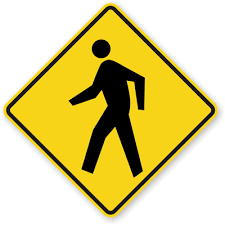
c. You may not pass cars ahead of you in your lane, even if the way is clear.
d. Traffic flows only in the direction of the arrow
2 This road sign means:
a. School Crossing
b. Pedestrian Crossing.
c. Railroad Crossing
d. Bicycle Crossing
3. This road sign means:
a. Rough Road, Bump, or Uneven Lanes
b. Unusual or potentially dangerous conditions are ahead
c. work zones inform that part of the road ahead is closed.
d. no passing zone
4 This road sign means:
a. the road ahead turns sharply right then sharply left.
b. curves right and a side road joins from the left
c. winding road ahead
d. Traffic in the lane must turn in the direction of the arrow
5 This road sign means:
a. School Crossing
b. Pedestrian Crossing.
c. Railroad Crossing
d. Bicycle Crossing
6 This road sign means:
a. merge
b. no left turn.
c. pass only in right lane.
d. cars in right lane must slow down
7 This road sign means:
a. Divided Highway begins Keep left
b Divided Highway begins Keep right
c. Divided Highway EndsKeep left.
d. Divided Highway Ends Keep right
8 This road sign means:
a. you must bear either right or left ahead.
b. the road ahead curves right, then left.
c. highway entrance ramp ahead.
d. construction ahead.
9 This road sign means:
a. Divided Highway begins Keep left
b two lane of traffic moving in the same direction.
c. Keep to the side indicated by the arrow.
d. Keep right and turn left
10 This road sign means:
a. Low place in the road
b. Soft shoulders.
c. Right lane ends soon, merge left.
d. Lane ends soon, merge right.
ANSWER
1) c: You may not pass cars ahead of you in your lane, even if the way is clear
2) b: Pedestrian Crossing.
4) d: Traffic in the lane must turn in the direction of the arrow
5) c: Railroad Crossing
6) a: merge
7) b: Divided Highway begins Keep right
8) a: you must bear either right or left ahead
9) c: Keep to the side indicated by the arrow.
10) c: Right lane ends soon, merge left.
2) b: Pedestrian Crossing.
4) d: Traffic in the lane must turn in the direction of the arrow
5) c: Railroad Crossing
6) a: merge
7) b: Divided Highway begins Keep right
8) a: you must bear either right or left ahead
9) c: Keep to the side indicated by the arrow.
10) c: Right lane ends soon, merge left.
Part 1: Traffic sign questions 4
Part 1 : Traffic sign questions Exam 4
2 This road sign means:


a. double curve, right then left.


ANSWER
1 This road sign means:
a. the road ahead turns sharply
right then sharply left.
b. curves right and a side road joins from the
left
c. winding road ahead
d. Traffic in the lane must turn in the direction of the arrow
a. parking space reserved for doctors.
b. parking space reserved for hospital employees.
c. parking space reserved for residents.
d.
parking space reserved for people with disabled parking privileges
3 This road sign means:
a. the road ahead curves left, then right.
b. steep grade ahead.
c. road construction ahead.
d. the road ahead curves right, then left.
4 This road sign means:
a. merge. Slow down to the safe speed indicated.
b. the
road ahead curves right. Slow down to the safe speed indicated.
c. divided highway begins. Slow down to the safe speed indicated.
d.
winding road ahead. Slow down to the safe speed indicated.
5 This road sign means:
a. double curve, right then left.
b. pavement ends.
c. winding road.
d. sharp turn to the right
6 This road sign means:
a. School Crossing
b. Pedestrian Crossing.
c. Railroad Crossing
d. Bicycle Crossing
.
7 This road sign means
a. a road joins from the right.
b. all traffic must go straight ahead.
c. no right turn.
d. all traffic must turn right.
8 This road sign means
a. left turn yield on green
b. traffic signals are ahead
c. no passing zone
d. roundabout ahead
9 This road sign means:
a. Rough Road, Bump, or Uneven Lanes
b. Unusual or
potentially dangerous conditions are ahead
c. Traffic flows only in the direction of the
arrow.
d. no
passing zone
10 This road sign means:
a. winding
road
b. Low
ground railroad crossing.
c. pedestrian
crossing
d. no passing zone
ANSWER
1) d: Traffic in the lane must turn in the direction of the arrow
2) d: parking space reserved for people with disabled parking privileges
3) d: the road ahead curves right, then left
10) b: Low ground railroad crossing
2) d: parking space reserved for people with disabled parking privileges
3) d: the road ahead curves right, then left
4) b: the road ahead curves right. Slow down to the safe speed indicated
6) c: Railroad Crossing slow down and be prepared to stop for trains
7) a: a road joins from the right
8) b: traffic signals are ahead
9) b: Unusual or potentially dangerous conditions are ahead These signs indicate a change in the traffic pattern
6) c: Railroad Crossing slow down and be prepared to stop for trains
7) a: a road joins from the right
8) b: traffic signals are ahead
9) b: Unusual or potentially dangerous conditions are ahead These signs indicate a change in the traffic pattern
10) b: Low ground railroad crossing
Subscribe to:
Posts (Atom)
